Monday, 9 July 2018

Snaefellsnes 3


Malarríf


The lighthouse at Malarrif was built in 1946, replacing an  earlier one which was built in 1917. A house was built at the same time for the lighthouse keeper. However it is no longer needed for this purpose as the light is now automated and controlled centrally. 


During Spring 2018 the old lighthouse keeper's house was used for training the new ICV trail team volunteers. We hope that this arrangement will become permanent in future: it is something I have wished for for years. Malarrif is stunningly beautiful; the house is neat and pleasant and there are useful outbuildings.


Trail team barbecue feast June 2018 outside the keeper's house.
As well as being the site of a lighthouse Malarrif was farmed until 1997. It must have been a hard life. In addition to being exposed to the wild weather of the North Atlantic, the area has no reliable water source. This may seem surprising in view of the high rainfall. But the volcanic rock is very porous so hardly any of that rain is held in or on the ground: instead it just goes right through. The keeper's house has a tank to collect rainwater from the roof. Such an arrangement works well enough on this small scale but would have been hardly adequate for a farm. These days a good road links Malarrif to the main highway 1.6km away. But until the 1980's neither of these existed. When the lighthouse was built in 1946 the materials had to be brought to the site by sea. I heard a story once that, in the 1930's, the farm was cut off from the outside world for three weeks after a heavy fall of snow.  

Some of the farm buildings have recently been remodeled to make an excellent new visitor centre for the Snæfellsjökull National Park, and mains water has been brought in.


The new visitor centre at Malarrif at around midnight in late June, with cloud pouring down the side of Snæfellsjökull behind.


This view looks from the lighthouse towards the keeper's house and outbuildings. In between can be seen the bizarrely shaped volcanic plug, Lóndrangar, and the distinctive shape of the mountain, Stapafell, at Arnastapi.


Another view of Lóndrangar and Snæfellsjökull.


Here a trail team work on the access path to Lóndrangar.

An old fish processing house has been renovated during the last few years and is now an education facility. Here volunteers are re-cladding the building.  


The completed education facility, surrounded by old whalebones. The bar which can be seen to the left, between the shingle and the rocks, was created when the lighthouse was built to make a safe haven for unloading building materials from boats.


See also my other posts, Snæfellsnes 1 and Snæfellsness 2.

ICV is the volunteer arm of the Icelandic Environment Agency. For more information see:


Sunday, 14 May 2017

Lónsöræfi


Lónsöræfi is a remote area tucked into the east side of the Vatnajökull glacier.


The map is from the Nordic Adventure Travel Guide.


When we work there we meet a specialist local driver at Höfn who takes us past Jokulsá í Lóni and into the mountains via a scary river crossing and some very scary and spectacular roads.


Our destination is a hut and campsite in a remote valley along a hiking trail. At the top of the hill overlooking the valley the car can get no further. We have to unload our tools and supplies and carry them the last 2 km. 


Past an ancient and somewhat puzzlingly sited longdrop...


In the foreground, on the far side of the river, is the camp site. The brown building is the shower and toilet block. The Ranger's hut can just be seen at the top of the bank behind, a little to the right.


Here, ICV volunteers are preparing the groundworks for a new septic tank to service the hut. How do they get a big plastic septic tank into a difficult location like this? Easy. They drive it up the river in winter when it's frozen.


Here a volunteer works with the Ranger to provide steps between the campsite and the hut.


This sheltered site is an oasis in the midst of the sub-glacial gravel. Wildflowers thrive. All the species which are becoming difficult to find back home are here in abundance.


Going for a hike, guided by our Ranger, on our day off. 


Fascinatingly frost-shattered rock.


Running the scree back to the hut. Such fun! Don't get many opportunities to do this these days.


Note:

ICV (Iceland Conservation Volunteers) is the volunteer arm of Umhverfisstofnun, the Environment Agency of Iceland.  For more information about ICV see: 


Wednesday, 29 June 2016

Volcanoes 4 - Þrihnúkagigur


Þrihnúkagigur, just outside Reykjavík, is a very special volcano. It's hollow. No-one is sure why. I think the consensus is that the magma that filled it around 4000 years ago may have drained back down through some loss of pressure, rather than erupting out of the top.

Since 2012 a tour company has been taking parties of visitors down inside it. Here a group is being lowered the 200 plus metres to the bottom in a specially designed lift.


Beautiful colours inside the cone


Looking up to the mouth of the volcano


A subsidiary crater nearby


Here a party of visitors is being brought across the lava field to the volcano by their guide. Visiting is only allowed under tightly controlled conditions because of the fragility of the crater and the surrounding lava field and moss. 


When I was there in late 2014 I was impressed by the care taken by the operator to contain the impact of this tourism, with guidance and monitoring by the Environment Agency. Because groups are accompanied by guides there is very little damage to the moss caused by people wandering off the path. Even inside the volcano, pathways and steps are made only from materials loose and ready to hand on the volcano floor - which can be put back if the operation is shut down. The toilets are of the composting type and all waste is removed for disposal elsewhere. 

It's a fine example of how tourism can be sustainably managed when there is a will to do so. I only wish I could say the same more often in Iceland. 


Because running an operation like this is complex and difficult, visiting the volcano doesn't come cheap. After checking the credit card balance and gritting your teeth you can find out more at 

https://insidethevolcano.com/the-volcano/


Thursday, 19 May 2016

Hólar


Iceland took up christianity at the beginning of the 11th century. By the beginning of the next it was divided into two episcopal sees, a northern and a southern one. Hólar í Hjaltadal was, from 1106, the episcopal see of northern Iceland. One of its bishops, Jón Arason was one of the, I think, very few casualties in Iceland's comparatively non-violent Reformation. He was beheaded along with his two sons in Skálholt, the see of the southern bishopric in 1550. Thenceforth Iceland adopted Lutheranism.


Though less violent than some other European Reformation conflicts, Iceland's was not without its excitements. There's a neat wiki summary here:

 
https://en.m.wikipedia.org/wiki/Icelandic_Reformation


Hólar is now a university specialising in Agriculture and Fish Biology, Equestrianism and Rural Tourism. Each year in May members of the ICV leadership team teach a short course on trail work to students on the tourism degree course.


Woodland trail building...


... and stone work on the mountain trails.


On occasion too, Hólar has been the location of ICV's Trail Team training. Here two teams enjoy an outdoor meal in the Spring sunshine.


Auðunarstofa


The bishop's office, Auðunarstofa, was built around 1315 with timber brought from Hólar's estates in Norway. It lasted until 1810 when it was demolished. The present one  is a replica, completed in 2002, using original tools and wood from Norwegian forests. Its name commmorates bishop Auðun the Red, 1313-1322. 


Nýibær


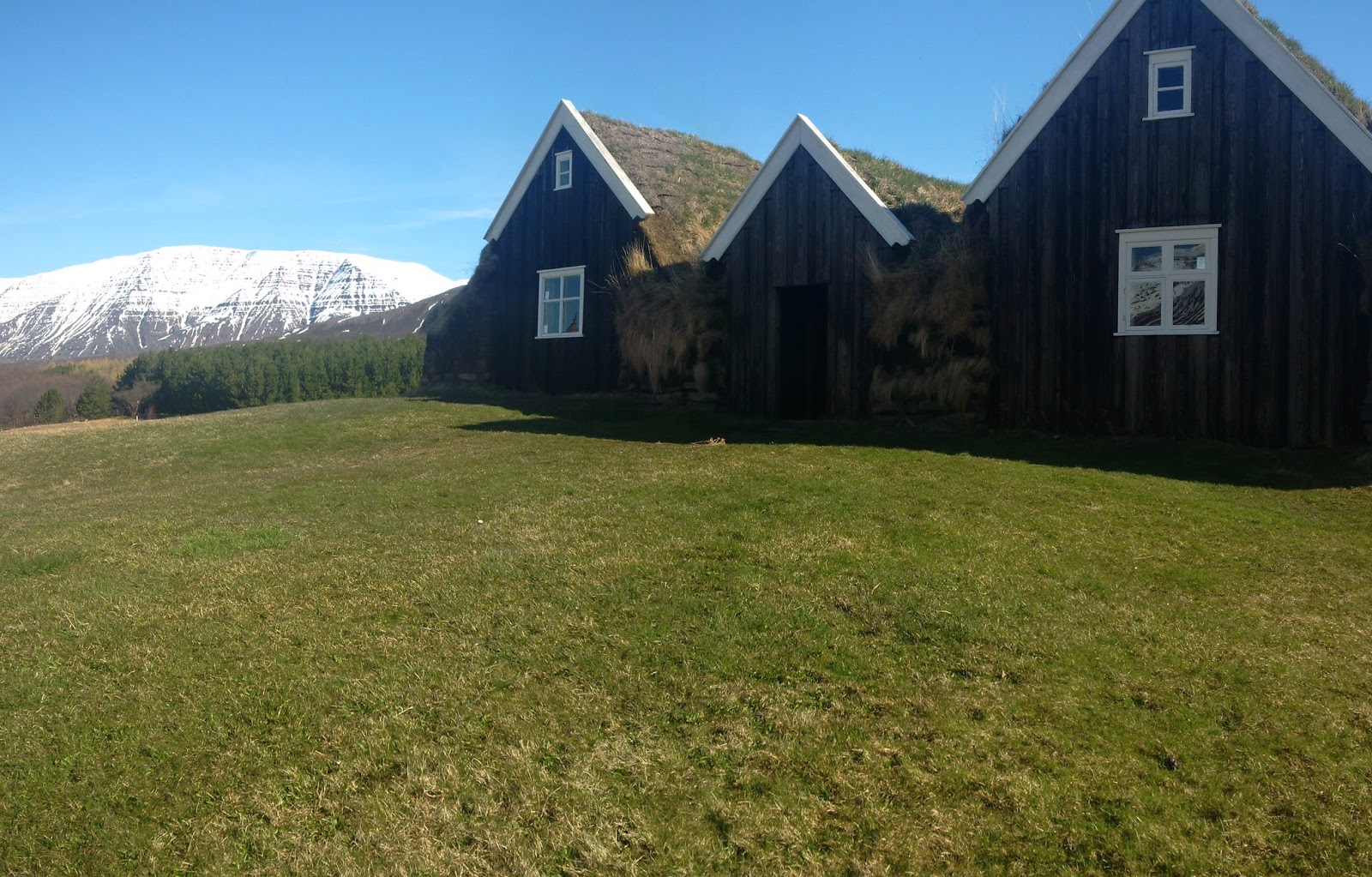
There is a beautifully preserved turf house here. Built in the mid 19th century it was named Nýibær, meaning 'new farm', to distinguish it from a pre-existing farm. It was lived in until 1945 and has belonged to The National Museum of Iceland since 1958. 


Turves are laid in a herringbone pattern. 


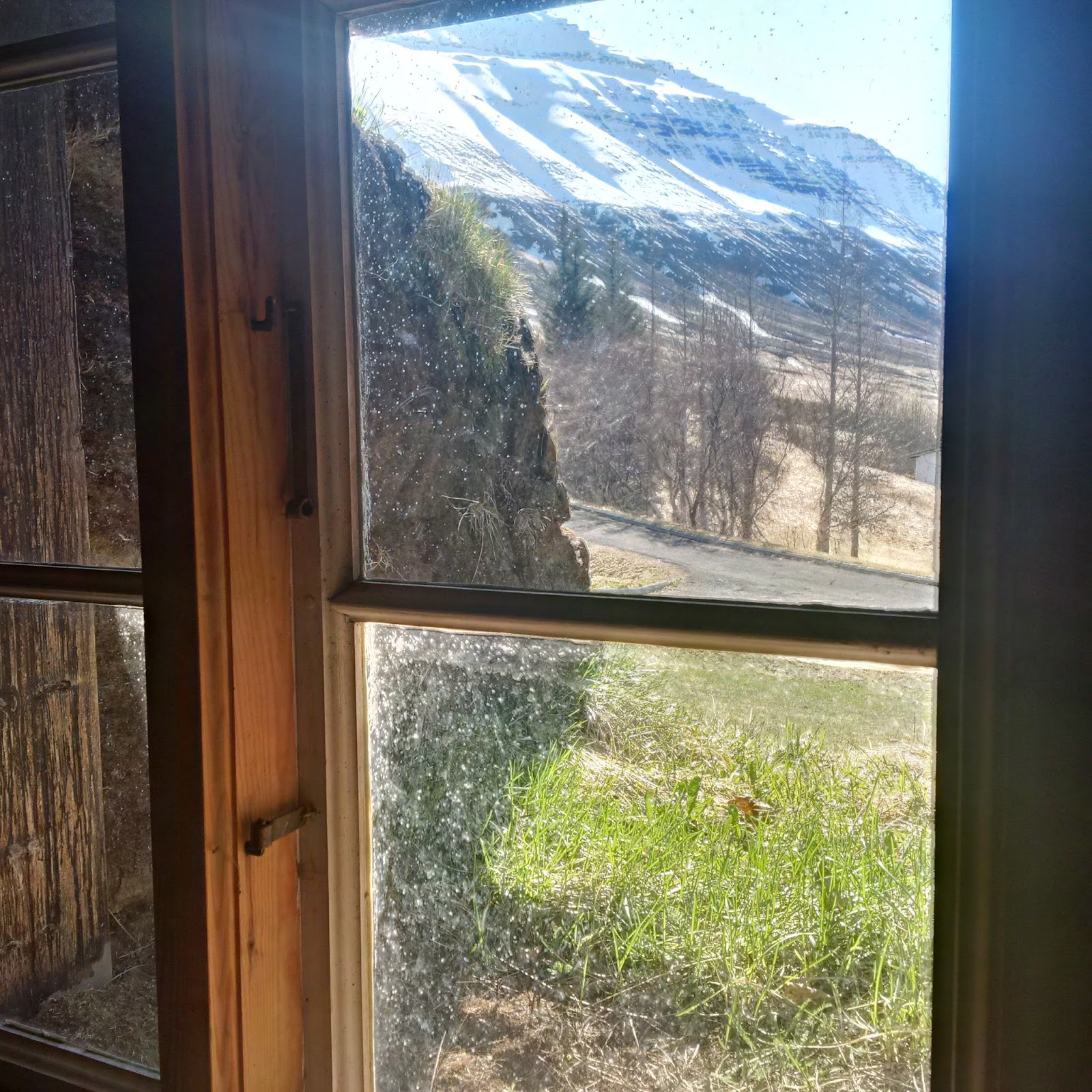
And just because it's a turf house doesn't mean it's crummy inside.


The current church was built in the 18th century using the beautiful reddish coloured stone from a quarry in the nearby mountainside. The tower, though built of concrete in 1950, sits very well with the church and has a timeless quality about it.


Inside the church there is a connection with my home town:


This Nottingham Alabaster from the 14th century is in Hólar church. Gypsum, the material out of which these carvings are made, is found around Nottingham and many of them are thought to have been made in the locality. The name, though, covers all of this kind of ware no matter where it was made. 


And before Hólar ...


Modern Church on the Site of Þorgeir's Church at Ljósavatn

 Around the year 1000, it  was decided at the annual AlÞing that Iceland should be christian. Actually it was not that simple. The matter was controversial: many were committed to paganism and wanted it to continue. The members gave the task of deciding to the Law Speaker, Þorgeir of Ljósavatn. Þorgeir retired from their company, covered himself in a blanket, and spent the next 24 hours in deep thought. Emerging, he announced his very diplomatic solution: Iceland would be officially christian and would abandon paganism. But old practices would be allowed to continue alongside - in private. Further serious conflict was avoided.

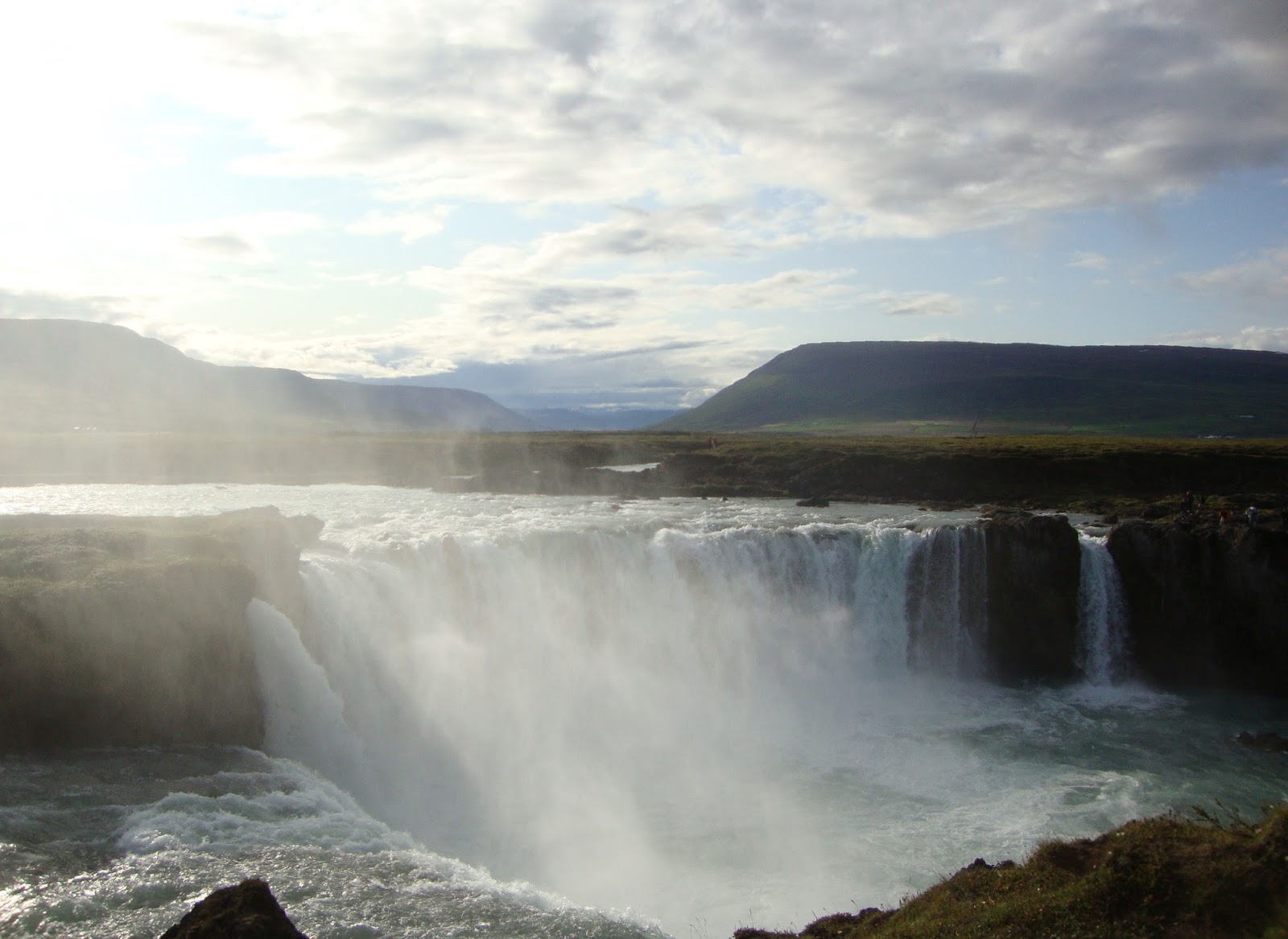
Þorgeir was a chieftain-priest from Ljósavatn in the north, not far from Hólar. In a further act of wise diplomacy, he took his pagan idols to a great waterfall nearby and threw them in. The waterfall  has since been known as Goðafoss, 'Waterfall of the Gods'.

Goðafoss


Looking out across the lake, Ljósavatn, from  Þorgeir's church

ICV (Iceland Conservation Volunteers) is the volunteer arm of Umhverfisstofnun, the Icelandic environment agency. The website is:

http://www.ust.is/the-environment-agency-of-iceland/volunteers/

You can find out more about the university at:

http://holar.is

There's a very nice piece about the turf house and other aspects of
Hólar here:

https://guidetoiceland.is/connect-with-locals/regina/holar-in-hjaltadalur-in-north-iceland